
Managing Complex Change
How to evaluate your readiness for change
6/13/20241 min read
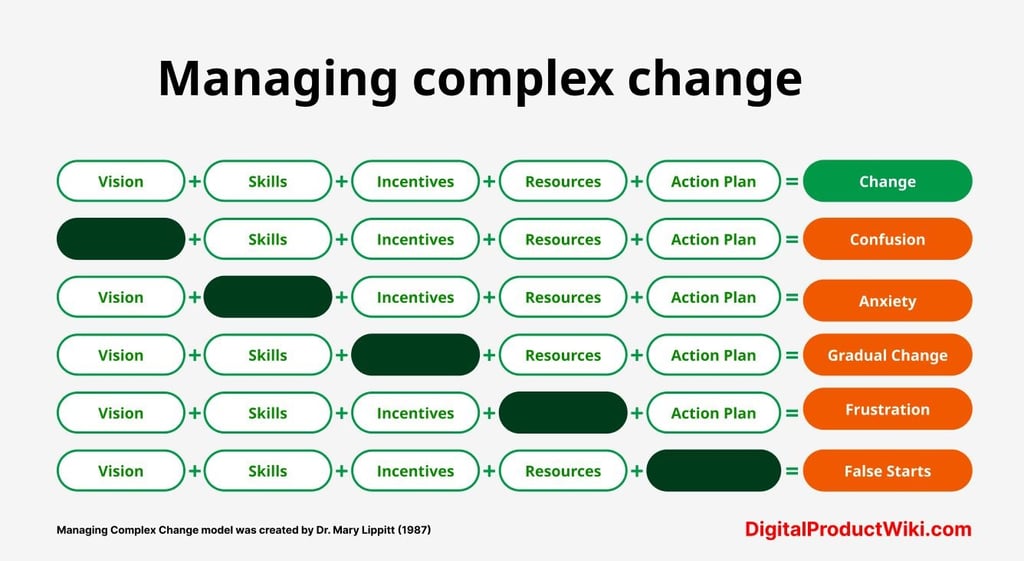
The Managing Complex Change model provides a guide toward asking the correct questions, but it may be difficult for some leaders to harness them into actionable steps. Without all of these key ingredients, even the most well-intentioned projects fail to mobilize teams, engage employees, and execute on strategy.
Vision—The “why” of the equation, vision is integral to keeping initiatives on track and preventing confusion. One way to combat a fragile vision is to approach the project from an outside perspective. The team should be able to explain the “why” back to you. It will quickly become clear if the team understand the vision.
Skills—When teams are equipped with the right set of skills for change, anxiety remains low. having a plan in place to train individuals so they can develop skills. Focus here first to determine if the team has been set up for success and, if not, where you can most effectively support their growth.
Incentives—Rewards and incentives encourage movement through complex change. Think of incentives as “core motivation.” Teams must be bought in to the concept, committed to the value it brings to the organisation, and personally motivated by a job well done.
Resources—Change cannot occur unless the proper resources are given to those on the project to keep them on the track toward success. If a team is short-staffed or lacks the resources needed to succeed, progress can slowly grind to a halt, resulting in frustration and doubts about the merits of the program. There needs to be plenty of upfront conversations to secure what is needed.
Action Plan—Share your action plan (OKRs) so teams remain aligned. A clearly articulated outcome based plan keeps teams focused with clear understanding of what the measurable key results will be.